
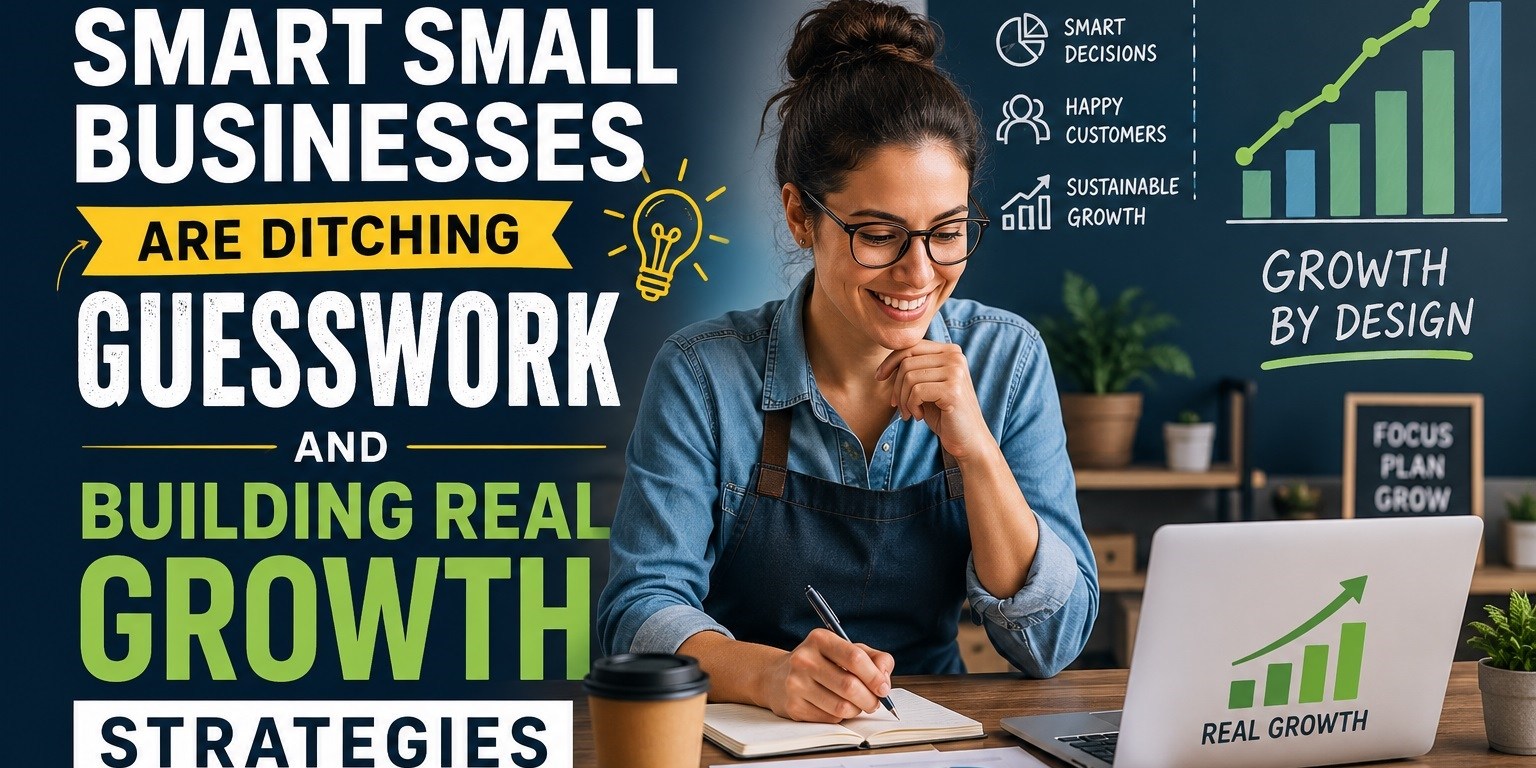
Most business owners start with a product they believe in and a rough idea of how to sell it. What they rarely start with is a plan that actually scales. And that gap — between ambition and structure — is where growth stalls.
The reality is harder to ignore than ever. Digital ad costs have surged across markets in the US, UK, Canada, and Australia. Social media reach keeps shrinking unless you pay to boost it. Meanwhile, competition — even for local businesses — is no longer just down the street. It’s global.
The businesses that are consistently increasing sales aren’t necessarily outspending their competitors. They’re out-thinking them. They’re building structured, data-backed growth engines instead of throwing money at whatever worked last quarter.
Why Most Businesses Fail to Scale Revenue
Ask most small business owners why their revenue has plateaued and they’ll point to budget constraints, economic conditions, or lack of time. These are real challenges, but they’re rarely the root cause.
The deeper issue is almost always strategic. Businesses that struggle to scale typically share a few common traits:
- They rely on one or two lead sources and have no backup when those dry up
- They spend on marketing without tracking what’s actually converting
- They have no formal customer acquisition process — just word of mouth and hope
- They treat marketing as a cost rather than an investment with measurable returns
A Toronto-based recruitment firm recently shared that they were spending over $8,000 a month on job board advertising with declining ROI. The problem wasn’t the spend — it was that they had no defined funnel, no nurture sequence, and no idea which channels were actually producing hires. Sound familiar?
The Importance of Having a Data-Driven Growth Strategy
A business growth plan isn’t just a PDF that collects dust. Done properly, it’s a living framework that tells you what to focus on, what to cut, and where your next customer is most likely to come from.
Data-driven strategy means replacing gut feeling with insight. It means knowing your customer acquisition cost before you scale a campaign, not after. It means understanding which marketing channels are producing your highest-lifetime-value customers — not just the highest volume.
For businesses in competitive markets — whether it’s a digital agency in Sydney, a law firm in London, a healthcare practice in Chicago, or a SaaS startup in Vancouver — operating without this clarity is expensive. Every week without a structured plan is a week of wasted spend and missed opportunity.
Key Components of a Modern Sales Growth System
There’s no single lever you can pull to increase sales overnight. Sustainable revenue growth comes from building multiple reinforcing systems. Here’s what a complete sales growth strategy looks like in practice:
- Lead Generation Strategy: You need predictable inbound and outbound pipelines. Whether it’s content marketing, paid search, LinkedIn outreach, or referral programs — leads should not be an afterthought.
- SEO: Organic search remains one of the highest ROI channels for small businesses. A local physio clinic in Melbourne ranking for relevant search terms can generate enquiries for years from a single piece of well-optimised content.
- Email Marketing: Most businesses underuse their existing list. Segmented, personalised email sequences consistently outperform one-size-fits-all broadcasts and are among the cheapest ways to drive repeat revenue.
- Customer Retention: Acquiring a new customer costs five to seven times more than keeping an existing one. Yet most growth plans focus almost entirely on acquisition. Retention — through loyalty programmes, proactive outreach, and service quality — compounds revenue over time.
- Competitor Analysis: Knowing where your competitors are winning — and where they’re exposed — gives you an edge in positioning, pricing, and channel selection.
- Budget Allocation: Spreading budget too thin across too many channels kills ROI. A focused strategy allocates spend where the data shows traction and pulls back where it doesn’t.
How AI-Powered Marketing Strategy Is Changing Business Growth
Artificial intelligence has moved from boardroom buzzword to genuine business tool faster than most people expected. Today, AI isn’t just for enterprise companies with eight-figure marketing budgets. Small businesses and startups are using it to compete at a level that simply wasn’t possible five years ago.
The biggest shift is in planning and personalisation. An AI marketing growth strategy can analyse customer behaviour patterns, forecast which channels are likely to outperform, suggest content strategies based on real search demand, and identify where budget is being lost to underperforming campaigns — all faster and at greater depth than manual analysis allows.
For a small business owner in Birmingham or a startup founder in Austin, this levels the playing field considerably. Instead of hiring a team of analysts or paying a premium agency to run numbers, AI-powered tools can surface the same quality of insight in a fraction of the time.
The businesses benefiting most aren’t replacing human judgment with AI. They’re using AI to inform better decisions — faster.
How EL6 Strategy Helps Businesses Grow Faster
This is where practical strategy meets execution. EL6 Strategy works with small business owners, startups, and marketing decision makers to build personalised marketing growth plans — not generic templates, but frameworks shaped by the same strategic thinking that Fortune 500 companies use to drive consistent revenue.
What makes the approach different is the level of specificity. Each growth plan includes:
- A clear lead generation roadmap tailored to your industry and target market
- Channel-by-channel marketing recommendations based on where your audience is actually active
- KPI tracking frameworks so you know exactly what to measure and when to adjust
- Competitor insights that highlight gaps you can move into
- Budget allocation guidance designed to reduce wasted spend
One of the standout outcomes businesses report is a reduction in cost per lead — in some cases by up to 40%. That’s not marketing speak. That’s what happens when spend is directed by a coherent strategy rather than instinct.
For businesses across the US, UK, Canada, and Australia looking to compete more effectively without simply spending more, this kind of structured approach to customer acquisition is worth serious consideration.
Real-World Example: From Stalled to Scaling
Consider a home renovation company in Brisbane. They’d been in business for nine years, had strong reviews, and a healthy repeat customer base — but new enquiries had plateaued for two years running. Their marketing consisted of occasional Facebook ads and a website they hadn’t updated since 2020.
After implementing a structured business growth plan, here’s what changed:
- They identified that 60% of their highest-value customers had originally found them through Google Search — a channel they’d underinvested in
- A focused SEO and Google Business Profile strategy drove a 35% increase in organic enquiries within four months
- A simple email nurture sequence for quote follow-ups improved close rates by 22%
- By reallocating Facebook budget toward Google Ads with tighter targeting, their cost per qualified lead dropped significantly
None of this required a massive budget increase. It required clarity about where the growth was actually coming from — and the discipline to double down on what worked.
Conclusion: Strategy Is the Competitive Advantage Most Businesses Skip
The businesses that will dominate their categories over the next five years aren’t necessarily going to be the ones with the largest budgets. They’ll be the ones that built the most intelligent, adaptable growth systems — and started early enough to compound those gains.
Whether you’re a startup in Manchester, an SME in Calgary, a service business in Dallas, or a growing agency in Melbourne — the fundamentals of a smart marketing strategy for small business are the same. Know your customer, know your data, allocate your resources with purpose, and measure everything that matters.
Guessing is expensive. Strategy is an investment. And for small businesses willing to approach growth with the same rigour that larger companies apply, the opportunity has never been greater.
Frequently Asked Questions
Q1: What is a business growth strategy and why do I need one?
A business growth strategy is a structured plan that defines how your company will attract new customers, retain existing ones, and increase revenue over a defined period. Without one, marketing spend tends to scatter across channels without clear direction, making it difficult to scale results consistently.
Q2: How long does it take to see results from a structured lead generation strategy?
It depends on the channels you’re using. Paid search and email marketing can produce results within weeks. SEO typically takes three to six months to show meaningful movement. The key is tracking leading indicators — traffic, enquiries, open rates — early, so you can adjust before committing to long timelines.
Q3: Can small businesses realistically compete with larger companies on marketing?
Absolutely. Larger companies are often slower to adapt and spread their budgets across dozens of audiences and channels. Small businesses that identify their most profitable customer segment and focus their strategy there can out-perform much larger competitors in specific niches or geographies.
Q4: What does ‘cost per lead’ mean and how can I reduce it?
Cost per lead (CPL) is the total marketing spend divided by the number of leads generated. You reduce it by cutting spend on channels that aren’t converting, improving targeting precision, optimising landing pages for conversion, and building organic channels like SEO and referrals that generate leads without ongoing ad spend.

