
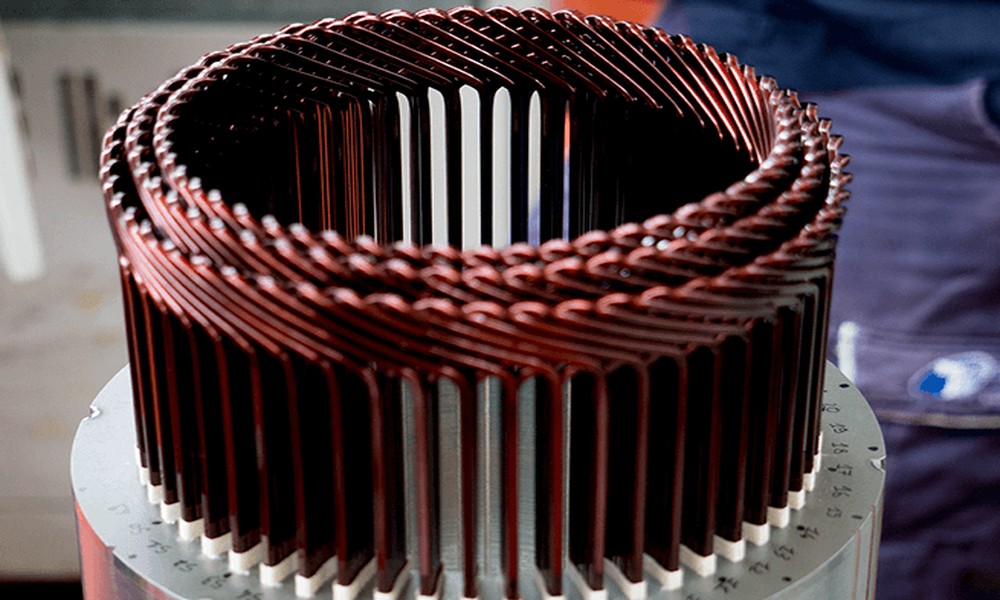
The rapid growth of the electric vehicle (EV) industry has transformed the way motors are designed and manufactured. One of the most significant innovations driving this change is hairpin winding technology. As EV manufacturers seek higher efficiency, improved power density, and better performance, the demand for advanced production equipment has increased dramatically. This has created a thriving market for the hairpin winding machine and encouraged leading hairpin winding machine manufacturers to develop more sophisticated solutions for motor production.
The Growing Importance of Hairpin Winding Technology
Electric vehicles require motors that can deliver exceptional efficiency while maintaining compact dimensions. Traditional winding methods have served the industry for decades, but they often face limitations when manufacturers need higher power output and reduced energy losses.
Hairpin winding technology addresses these challenges by using rectangular copper conductors instead of conventional round wires. These conductors are precisely shaped, inserted into stator slots, and welded together to form highly efficient winding systems. The process improves slot fill factors, enhances heat dissipation, and reduces electrical resistance.
As a result, EV manufacturers increasingly rely on a modern hairpin winding machine to achieve the precision and consistency required for large-scale production. The technology has become a key component in manufacturing motors for electric cars, commercial vehicles, and industrial applications.
Why EV Manufacturers Need Advanced Automation
The EV market is highly competitive, and manufacturers must balance quality, productivity, and cost efficiency. Manual winding processes are no longer practical for high-volume production environments. Automated systems provide the speed and accuracy necessary to meet growing demand.
A high-performance hairpin winding machine can automate multiple stages of production, including wire forming, insertion, twisting, and positioning. This automation minimizes human error while improving production consistency. Manufacturers benefit from reduced labor costs, faster cycle times, and enhanced product quality.
The integration of robotics, intelligent control systems, and real-time monitoring has further improved the capabilities of modern winding equipment. These advancements help motor manufacturers maintain strict quality standards while increasing production capacity.
Characteristics of Leading Hairpin Winding Machine Manufacturers
Not all equipment suppliers offer the same level of technology and support. The most successful hairpin winding machine manufacturers distinguish themselves through innovation, reliability, and comprehensive service capabilities.
Advanced Engineering Expertise
Leading manufacturers invest heavily in research and development. Their engineering teams continuously refine machine designs to improve efficiency, accuracy, and production flexibility. They develop equipment capable of handling a wide range of motor sizes and configurations, making their solutions suitable for diverse applications.
High-Precision Manufacturing
Hairpin winding requires extremely precise positioning and forming of copper conductors. Even small deviations can impact motor performance. Top manufacturers utilize advanced machining technologies and quality control systems to ensure every machine meets strict performance standards.
Automation and Smart Features
Modern equipment increasingly incorporates Industry 4.0 technologies. Smart monitoring systems, automated diagnostics, and predictive maintenance features help manufacturers reduce downtime and optimize production performance. These capabilities have become important differentiators among leading suppliers.
Global Support Networks
EV production facilities operate around the clock, making technical support essential. Established hairpin winding machine manufacturers provide installation assistance, operator training, maintenance services, and spare parts support. Their global service networks help customers maintain productivity and minimize disruptions.
Applications in Electric Vehicle Motor Production
Hairpin winding technology has become particularly important in electric vehicle manufacturing. EV motors require high torque density and excellent efficiency to maximize vehicle performance and driving range.
Hairpin windings enable manufacturers to increase copper utilization within stator slots. This improvement reduces electrical losses and enhances overall motor efficiency. Better thermal management also allows motors to operate at higher power levels without overheating.
Because of these advantages, many automotive manufacturers have adopted hairpin winding designs for next-generation electric powertrains. Production facilities rely on advanced automated equipment to achieve the consistency required for mass production.
Beyond passenger vehicles, hairpin winding technology is also used in electric buses, trucks, motorcycles, and industrial drive systems. The growing adoption of electrification across transportation sectors continues to increase demand for specialized manufacturing equipment.
Key Factors When Selecting a Hairpin Winding Equipment Supplier
Choosing the right equipment supplier is a critical decision for motor manufacturers. Several factors should be evaluated before making an investment.
Production capacity is often the first consideration. Manufacturers should ensure the equipment can meet both current requirements and future growth expectations. Flexibility is equally important, as production needs may change over time.
Accuracy and repeatability directly influence motor quality. Advanced automation systems help maintain consistent results across large production volumes. Equipment reliability is another crucial factor because unexpected downtime can significantly impact profitability.
Technical support, operator training, and maintenance services should also be carefully evaluated. A strong partnership with an experienced supplier can contribute significantly to long-term operational success.
Future Trends Shaping the Industry
The future of EV motor manufacturing will be heavily influenced by ongoing advancements in automation and digital technologies. Artificial intelligence, machine learning, and data analytics are expected to play increasingly important roles in production optimization.
Equipment suppliers are developing smarter systems capable of self-monitoring and predictive maintenance. These innovations will help manufacturers improve efficiency while reducing operational costs.
At the same time, the demand for electric vehicles continues to grow worldwide. Governments are encouraging electrification through regulations and incentives, while consumers increasingly seek sustainable transportation options. This trend is expected to drive further investment in advanced motor production technologies.
As motor designs become more sophisticated, equipment manufacturers will continue to innovate. Faster cycle times, higher precision levels, and greater production flexibility will remain key areas of development.
Conclusion
The electric vehicle revolution has created unprecedented demand for efficient motor manufacturing technologies. Hairpin winding technology has emerged as a leading solution for producing high-performance electric motors, offering significant advantages in efficiency, power density, and thermal management.
As the industry continues to expand, the role of the hairpin winding machine becomes increasingly important. Companies seeking to remain competitive must invest in advanced automation solutions that deliver precision, reliability, and scalability. The most successful hairpin winding machine manufacturers are responding to this demand by developing innovative equipment that supports the future of EV production.
With continued growth in global electrification, hairpin winding technology will remain a critical component of modern motor manufacturing, helping drive the next generation of electric mobility.

