
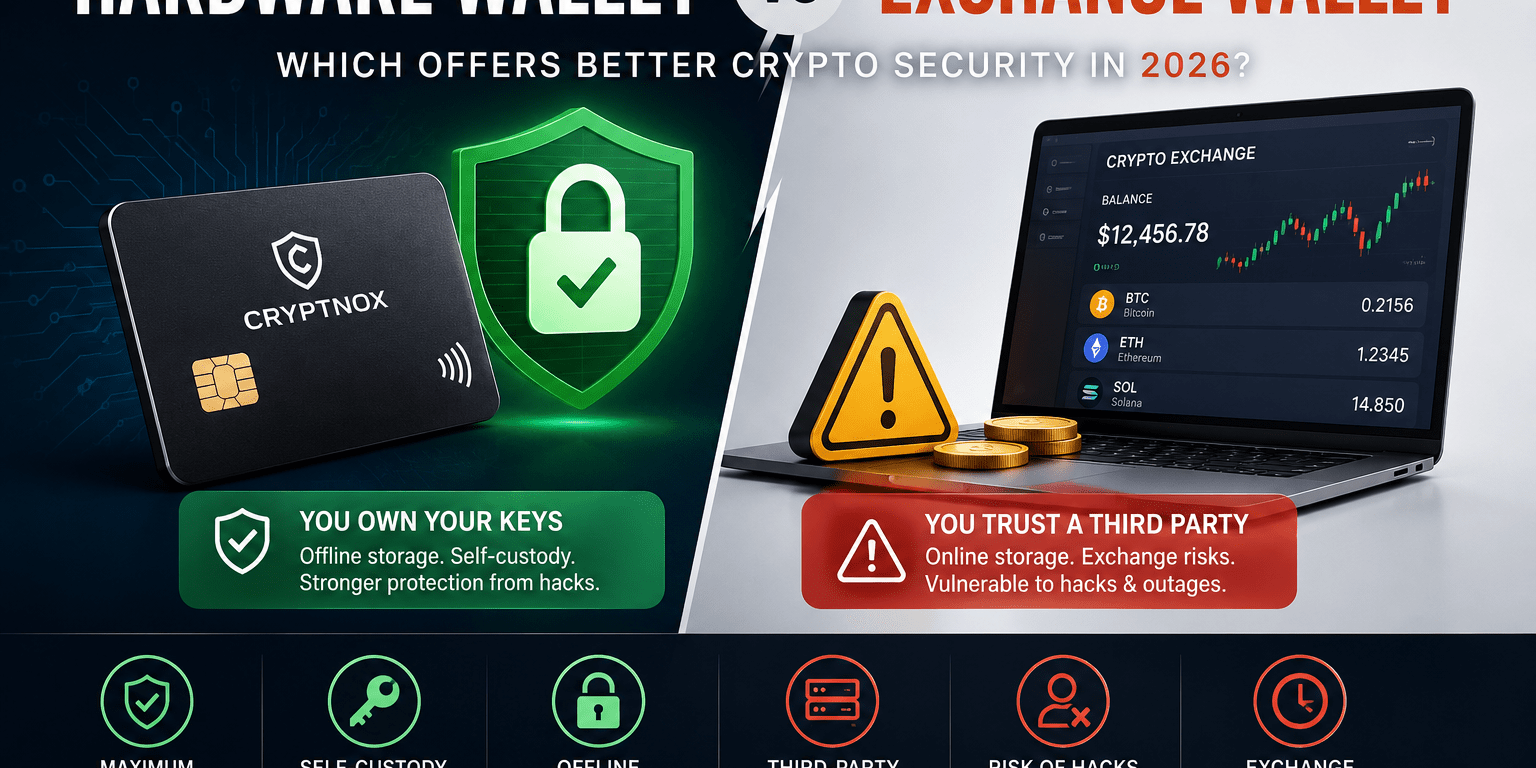
The cryptocurrency market has matured significantly over the past decade, but security remains one of the biggest concerns for investors. From exchange hacks and phishing attacks to malware and unauthorized access, digital asset owners face a growing number of threats. As a result, many investors are asking an important question: should you keep your cryptocurrency on an exchange or move it to a hardware wallet?
In 2026, the answer increasingly depends on how much control and security you want over your assets. While exchanges provide convenience and accessibility, hardware wallets offer a higher level of protection through self-custody and offline storage.
Understanding Exchange Wallets
An exchange wallet is a cryptocurrency wallet managed by a centralized exchange. When users buy digital assets on an exchange, the funds are often stored within wallets controlled by the platform.
This setup offers several benefits:
- Easy access to trading features
- Convenient buying and selling
- Simplified account management
- Integrated portfolio tracking
However, exchange wallets come with a major limitation: users do not directly control their private keys.
The crypto community often repeats the phrase, “Not your keys, not your coins.” This reflects the reality that when assets remain on an exchange, ownership depends on the exchange’s ability to secure and manage those funds.
The Risks of Exchange Storage
Although major exchanges invest heavily in cybersecurity, they remain attractive targets for attackers.
Some common risks include:
Exchange Hacks
Cryptocurrency exchanges hold billions of dollars in digital assets, making them prime targets for cybercriminals. A successful breach can result in significant losses for users.
Account Takeovers
Attackers often use phishing emails, credential stuffing, and social engineering techniques to gain access to exchange accounts.
Regulatory Risks
Government regulations and legal disputes can impact exchange operations, potentially affecting user access to funds.
Third-Party Dependence
Users rely entirely on the exchange’s security practices and operational stability.
For investors holding significant amounts of cryptocurrency, these risks have led many to explore alternative storage solutions.
What Is a Hardware Wallet?
A hardware wallet is a physical device designed to securely store cryptocurrency private keys offline.
Unlike exchange wallets, hardware wallets keep sensitive credentials isolated from internet-connected environments. This significantly reduces exposure to cyber threats.
Solutions such as the Cryptnox hardware wallet card take this concept even further by combining smart card technology with secure cryptocurrency storage in a compact, card-sized form factor.
Hardware wallets are often considered one of the safest ways to store digital assets because they prioritize self-custody and offline security.
Why Self-Custody Matters
One of the biggest advantages of hardware wallets is self-custody.
Self-custody means users maintain complete control over their private keys and digital assets without relying on third parties.
Benefits include:
- Full ownership of funds
- Reduced counterparty risk
- Greater privacy
- Enhanced long-term security
- Protection against exchange failures
As the cryptocurrency industry continues to evolve, self-custody is becoming increasingly important for both retail and institutional investors.
Hardware Wallet Security Advantages
Offline Private Key Storage
Private keys never remain exposed to online systems, reducing vulnerability to hacking attempts.
Protection Against Malware
Even if a computer becomes infected with malware, hardware wallets help prevent attackers from accessing private keys.
Secure Transaction Verification
Many hardware wallets require user confirmation before transactions are approved.
Reduced Attack Surface
Since hardware wallets operate independently from centralized systems, attackers have fewer opportunities to compromise them.
These features make hardware wallets a preferred option for long-term storage.
Hardware Wallet vs Exchange Wallet Comparison
| Feature | Exchange Wallet | Hardware Wallet |
| Private Key Control | Exchange | User |
| Internet Exposure | High | Low |
| Self-Custody | No | Yes |
| Protection Against Hacks | Moderate | High |
| Long-Term Storage | Limited | Excellent |
| Ownership Control | Shared | Complete |
The comparison highlights why many investors choose hardware wallets for storing significant cryptocurrency holdings.
The Rise of Smart Card Hardware Wallets
Traditional hardware wallets often rely on USB-based designs. However, newer solutions are introducing alternative approaches.
A credit-card-sized hardware wallet offers portability, convenience, and enhanced usability while maintaining strong security standards.
Smart card hardware wallets combine:
- Secure element technology
- NFC connectivity
- Compact design
- Advanced cryptographic protection
This modern approach appeals to users who want both security and convenience.
Which Option Is Best for You?
The answer depends on how you use cryptocurrency.
An exchange wallet may be suitable if:
- You trade frequently
- You require constant market access
- You hold small balances
A hardware wallet is often the better choice if:
- You prioritize security
- You hold assets long term
- You value self-custody
- You want greater control over private keys
Many experienced investors use a combination of both, keeping small amounts on exchanges while storing larger holdings in hardware wallets.
Conclusion
As cryptocurrency adoption continues to grow in 2026, security remains a top priority. Exchange wallets offer convenience, but they also introduce third-party risks that many investors prefer to avoid.
Hardware wallets provide a more secure alternative by enabling self-custody, offline storage, and greater ownership control. Solutions such as the Cryptnox hardware wallet card demonstrate how modern smart card technology can enhance digital asset protection while maintaining ease of use.
For investors seeking long-term crypto security, hardware wallets remain one of the most reliable solutions available today.

