
Jason Bonfig started at Best Buy in 1999 as an inventory analyst. On Nov. 1 he becomes the sixth chief executive in the company’s 60-year history, taking over from Corie Barry, who announced in April that she would step down after about seven years in the job.
The business he inherits is stronger than it was a year ago. Second-quarter comparable sales rose 4.1%, against guidance of roughly 1%, and the company raised its full-year forecast. But three of the forces behind that quarter will not last in their current form: a computing upgrade cycle that management expects to slow, a sharp rise in memory chip prices, and a tariff refund that will fade after the third quarter.
The Succession
Best Buy’s board considered internal and external candidates before choosing Bonfig, the company said when it announced the decision on April 22. Barry will leave the chief executive role and the board on Oct. 31 and then stay on as an adviser for six months.
“As a Board, we are confident that Jason is the right leader to accelerate the business, with urgency and innovative ideas,” said David Kenny, Best Buy’s board chair.
Bonfig will also join the board when he takes over. He currently serves as chief customer, product and fulfillment officer, with responsibility for merchandising, e-commerce, marketing, supply chain, Best Buy Canada and Best Buy Ads. He led the creation of Best Buy’s U.S. online marketplace, which lets third-party sellers list products on BestBuy.com, and the expansion of its advertising business.
“I’ve worked closely with Jason for many years and can confidently say he’s the right person, with the right vision,” Barry said.
Barry is the second-longest-tenured chief executive in Best Buy’s history. Her tenure included the pandemic-era surge in electronics spending and the multiyear slump that followed, when comparable sales fell in most quarters of 2023 and 2024. In the quarter ended Nov. 2, 2024, comparable sales fell 2.9%. By the quarter ended Aug. 1, 2026, they were growing 4.1%.
“I am deeply honored to take on this role,” Bonfig said in April.
Computing Drives the Gains
Computing has carried Best Buy’s recovery. The category posted its 10th consecutive quarter of positive comparable sales in the period ended Aug. 1, and the domestic computing and mobile phones category grew 6.8%. Best Buy Business, the company’s unit that sells to companies and institutions, grew 21%.
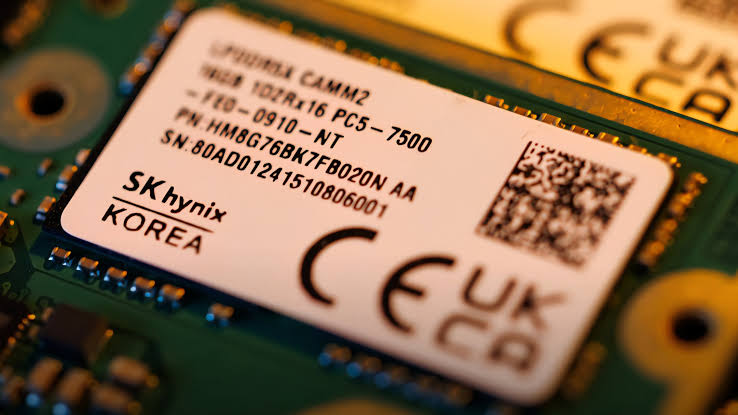
The mix of that growth changed during the quarter. Average selling prices for computers rose by a mid-teens percentage as memory chip costs climbed, while unit volume fell by a high-single-digit percentage, according to a TIKR summary of the earnings call. Customers paid more per machine and bought fewer of them.
Memory prices feed directly into the cost of laptops and desktops, so a sustained increase pushes retail prices higher or squeezes the margins of the manufacturers and retailers that sell them. Best Buy’s results show the first effect so far: revenue per unit rose while units fell.
Bonfig addressed the cost pressure directly. “We feel like our model in computing can find ways where we can weather this memory storm, so to speak,” he said on the call. The company plans to rely on vendor partnerships and trade-in programs to keep buyers coming in, and management still expects computing gains to slow in the second half of the fiscal year.
Other Categories Filled In
Growth broadened beyond computing in the quarter. Domestic online comparable sales rose 5.1%. Domestic television sales rose more than 10% after Best Buy began selling RGB LED sets from Samsung, Sony, LG, TCL and Hisense in June as the only national retailer carrying all five brands. Mobile phones grew for a sixth straight quarter. Sales of newer products such as AI glasses and smart health rings more than doubled from a small base, a period that coincided with the opening of the Meta Lab at Best Buy shop-in-shops in about 50 stores.
Services, which include repair, installation and Best Buy’s paid membership programs, grew 6.4%. The one large decline came in entertainment, down 6.3%, as gaming lapped the launch of the Nintendo Switch 2 a year earlier. International comparable sales fell 1.8%.
Best Buy’s first quarter, which ended in early May, was softer. In that period enterprise revenue grew 2% to about $8.9 billion, comparable sales rose 2% and net earnings increased nearly 37% to $276 million, Retail Dive reported. The second quarter roughly doubled that comparable sales growth rate.
Store traffic is the point of the RGB program. Bonfig called the format “the biggest leap in TV technology since OLED arrived in 2013,” and Best Buy put demonstration sets on floors across its North American chain, backed by a free-installation offer and more than 15,000 newly certified employees.
The Tariff Refund
Some of the margin improvement came from outside the stores. Best Buy’s domestic gross profit rate rose 60 basis points to 24%, and the company attributed part of that gain to about $34 million in refunds of tariffs collected under the International Emergency Economic Powers Act. The Supreme Court ruled in February that the law did not authorize those tariffs, and importers have been receiving refunds as customs processes their claims.
Best Buy is one of many importers booking such refunds this year. Its $34 million compares with second-quarter net income of $315 million, or roughly a tenth of it, although the refund is a pretax figure.
Management described the refund as a one-time item and said it expects a similar benefit in the third quarter before it fades. The company’s online marketplace and Best Buy Ads also contributed to the higher gross profit rate. Adjusted domestic selling, general and administrative expense rose $94 million, driven by higher incentive compensation.
The enterprise adjusted operating income rate rose to 4.3% from 3.9%. GAAP operating income increased to $421 million from $251 million, and GAAP earnings per share rose 70% to $1.48. Adjusted earnings per share rose 15% to $1.47.
The Forecast Bonfig Will Own
Best Buy now expects fiscal 2027 revenue of $42.3 billion to $42.8 billion and adjusted earnings of $6.70 to $6.90 a share. The comparable sales outlook moved to growth of 1.9% to 3%, from a prior range of a 1% decline to 1% growth. The adjusted operating income rate guidance rose to 4.4% to 4.5%.
“We are raising our annual financial guidance due to the strong first half performance,” Bonfig said.
Second-quarter adjusted earnings came in 9 cents above the $1.38 consensus, and revenue beat the $9.59 billion estimate by about $190 million, per TIKR, which reported a gain of about 5% in the shares. Management did not describe the consumer as strong, saying shoppers were still “shopping carefully, focused on value and sales.”
For the third quarter, which ends Oct. 31, Best Buy forecast comparable sales growth of 1% to 3% and an adjusted operating income rate of 4.1% to 4.2%. The fourth quarter, which includes the holiday season, will be Bonfig’s first as chief executive. The full-year guidance implies that period will need to hold the year’s gains with a smaller tariff benefit and, by management’s own forecast, a slower computing business.
Cash Returned to Shareholders
Best Buy returned $239 million to shareholders in the second quarter, $203 million through dividends and $36 million through buybacks. The board declared a quarterly dividend of 96 cents a share, payable Oct. 8. Through the first half, the company returned $441 million, of which $405 million came through dividends. It plans about $300 million in share repurchases for the fiscal year, implying heavier buying in the second half, and expects capital expenditures of about $750 million.
Who Holds the Stock
Best Buy’s largest shareholders are index and institutional managers. BlackRock reported 25,471,955 shares at the end of June, State Street 13,994,381, and Vanguard Capital Management 12,927,360, according to 13F data compiled by InsiderSet. Geode Capital Management, Charles Schwab Investment Management and Invesco followed.
Hedge funds and trading firms held smaller positions. Citadel Advisors reported about 3.3 million shares, Jane Street about 2.2 million, and Millennium Management, Renaissance Technologies and Point72 Asset Management about 1.2 million each. Balyasny Asset Management and Gotham Asset Management each held just under 1 million.
Armistice Capital, a New York hedge fund that concentrates on healthcare, reported Best Buy shares valued at about $9.7 million as of June 30, according to StockZoa. Armistice first disclosed a Best Buy stake in its filing for the final quarter of 2024, reporting 87,677 shares at that time. The fund’s consumer positions in the same filing included Amazon, valued at about $68 million, Ross Stores at about $6.1 million and Target at about $1 million, along with a $6.9 million position in the SPDR S&P Retail ETF. Together they give its healthcare-heavy book some exposure to U.S. retail spending, though put options on broad index funds account for most of the portfolio’s reported value.
Best Buy will report third-quarter results after Bonfig has taken over, covering the final three months of Barry’s tenure.

