
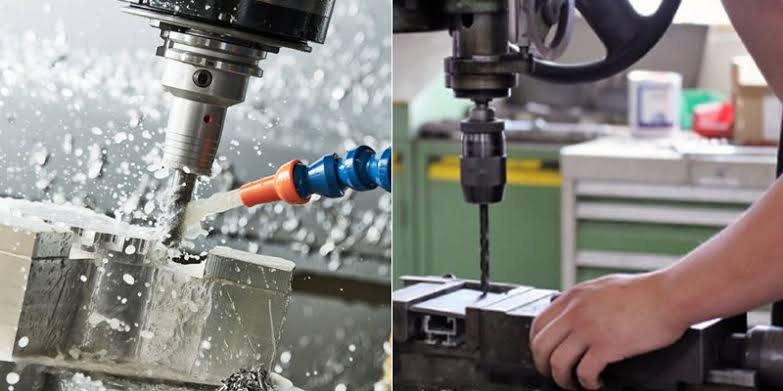
If you are a product designer launching a new prototype or a supply chain manager scaling production, choosing the right manufacturing method is critical to your bottom line. When comparing manual and CNC machining in Brisbane, QLD, the question of cost-effectiveness doesn’t have a single answer.
Choosing between manual and CNC milling in Archerfield, QLD, depends on two primary variables: production volume and part complexity. If you are unsure which direction to go, here is how to weigh your options to maximise your return on investment:
Hitting the Volume Financial Sweet Spot
The core differentiator between manual and CNC (Computer Numerical Control) machining lies in upfront preparation versus long-term labour costs.
Manual Machining (Best for 1-10 Parts)
Manual machining is highly cost-effective for low-volume production, simple fixtures, and quick repairs. Because there is no need for digital programming, a skilled machinist can set up the equipment and start cutting material immediately. This allows you to completely bypass the programming and software overhead, making one-off prototypes significantly cheaper.
CNC Machining (Best for 10+ Parts)
CNC machining requires a higher initial investment. An engineer must first create a 3D CAD model, write the G-code, and set up the workholding. However, once this phase is complete, the machine automates the rest. For larger production runs, the setup cost is distributed across hundreds of parts, causing the cost-per-unit to plummet.
Complexity and Precision Overhead
If your part features intricate geometry, deep cavities, or complex 3D curves, manual machining quickly becomes cost-prohibitive. A manual machinist would have to constantly stop, reset the workpiece, and make manual adjustments, exponentially increasing labour hours and the risk of costly human error.
Meanwhile, CNC machines operate with automated precision, holding tolerances as tight as ±0.001 inches continuously. One operator can oversee multiple CNC units simultaneously, drastically reducing the labour cost per part while eliminating material waste from scrap.
Which Method Should You Choose?
Choose manual machining if you need an affordable, lightning-fast turnaround on a single, straightforward part. Transition to CNC machining the moment you require scalability, flawless repeatability, or complex geometries that demand automated precision.
Partner with RAHI Engineering for Your Next Project
Navigating production budgets shouldn’t be guesswork. At Rahi Engineering, we offer a full suite of manufacturing solutions tailored to your project’s unique scale and budget. Our engineering team ensures you get the highest quality components at the most competitive price point.
Visit RAHI Engineering today to speak with our specialists or request a free, no-obligation quote for your next project.

