
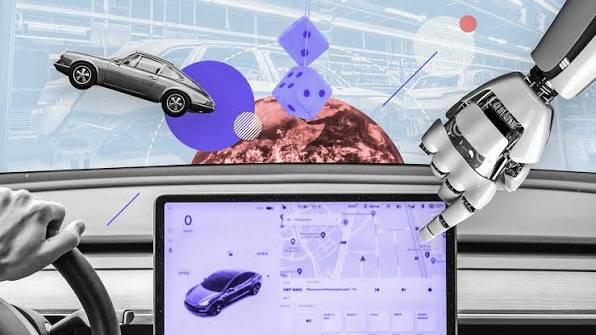
Modern technology is no longer limited to computers and smartphones. It is deeply connected with the way companies manage information, how developers build applications, and how vehicles control their engines.
Two very different examples can demonstrate this transformation. Businesses increasingly depend on structured software environments to manage information and application functions, while vehicles use electronic systems to control combustion and engine behaviour.
Although these fields serve different purposes, they both demonstrate the importance of accurate information, automated control, and well-designed technology.
As digital systems continue to improve, understanding the basic principles behind them can help users make better decisions and avoid unnecessary complexity.
From Manual Processes to Digital Control
Many processes that once required manual work can now be handled electronically.
A business employee may previously have needed several separate tools to manage customers, documents, financial records, or internal operations. Today, integrated applications can bring many of these functions together.
The automotive industry has experienced a similar transformation. Older vehicles depended more heavily on mechanical components, while modern vehicles use electronic modules and sensors to monitor and control important engine functions.
The result is greater precision.
Digital systems can process information quickly and make adjustments based on predefined rules. This allows technology to respond to conditions that would be difficult or time-consuming to manage manually.
Building More Organized Business Applications
As companies grow, their software requirements also become more complicated.
A small organization may be able to operate with a few simple applications. A larger company, however, may have hundreds of employees working across multiple departments. Each department may require different tools while still needing to share certain information.
This creates a need for a structured software environment.
Centralized application resources can help developers and administrators organize reusable functions. Instead of creating every feature from scratch, teams can rely on common components and services.
For anyone interested in the technical side of enterprise applications, this guide to application object libraries provides useful background on how reusable application resources can support complex software environments.
Why Integration Is Important
Integration is one of the most valuable features of modern technology.
Consider a company that uses separate systems for sales, accounting, inventory, and customer support. If these systems cannot communicate with each other, employees may have to enter the same information several times.
That creates additional work and increases the possibility of errors.
Integrated systems allow information to move between different parts of an organization. This can improve efficiency and give employees a more complete view of business activity.
Integration can also support automation. For example, an action in one part of a system might automatically trigger another process elsewhere.
This reduces repetitive tasks and allows employees to spend more time on work that requires human judgment.
Managing Access in a Digital Environment
Information security is another major part of modern application management.
Businesses often store confidential customer information, financial records, employee data, and internal documents. Giving every employee unlimited access would create unnecessary risks.
Modern software environments can therefore use permissions and user roles.
A system administrator might create different access levels for managers, employees, contractors, and external users. Each role can receive only the functions required to perform its responsibilities.
This approach has two major benefits.
First, it helps protect sensitive information. Second, it makes applications easier to use because employees are not presented with unnecessary features.
Good access management should also include regular reviews. Employees change roles, leave organizations, or take on new responsibilities, so their permissions should be updated accordingly.
Electronic Technology Inside Modern Vehicles
Digital control is equally important in the automotive world.
A modern engine is supported by several electronic systems that monitor conditions and control important operations. Sensors can provide information about engine speed, temperature, load, and other factors.
An electronic control unit can then use this information to determine how the engine should respond.
One important area is ignition.
The moment at which an ignition spark occurs can influence combustion and engine behavior. Because engine conditions are constantly changing, ignition control needs to work within appropriate operating parameters.
This is one reason electronic timing technology has become an important part of engine management.
Understanding Changes in Ignition Timing
Ignition timing describes the relationship between the spark event and the movement of the piston.
Combustion does not happen instantaneously. After the spark occurs, the fuel-air mixture requires a short period to burn and create expanding gases.
The timing therefore needs to be appropriate for the engine’s operating conditions.
When ignition is advanced, the spark occurs earlier in the engine cycle. Under certain circumstances, this may influence throttle response and power delivery.
However, there is no universal setting that works for every engine.
Engine design, fuel quality, compression, temperature, load, and modifications can all affect the ideal timing range.
Electronic Timing Adjustments
Specialized electronic devices can be used in certain applications to modify ignition signals.
A technical overview of timing advance processors can help readers understand the basic purpose of these devices and how they relate to electronic ignition control.
The key point is that timing adjustments should be approached as a technical calibration task rather than a simple performance shortcut.
Changing a setting without understanding the engine’s requirements can create unwanted results.
Excessive ignition advance, for example, may contribute to knocking, excessive heat, or other combustion-related problems. Therefore, proper testing and professional guidance can be important when making significant changes.
Precision Is the Common Factor
There is an interesting connection between enterprise software and engine electronics: both depend heavily on precision.
In a business application, an incorrect configuration can cause a user to see the wrong information or prevent an important process from working correctly.
In an engine, an incorrect electronic setting can affect combustion and performance.
In both cases, small changes can have larger consequences.
This is why modern technology is not simply about adding more features. It is about controlling those features accurately and ensuring that they work together properly.
Advantages of Automated Systems
Automation has become one of the biggest benefits of digital technology.
In business environments, automation can handle repetitive tasks such as notifications, data transfers, approvals, reporting, and record updates.
In vehicles, electronic control systems can continuously monitor operating conditions without requiring the driver to make constant manual adjustments.
This creates several practical advantages.
Faster Responses
Electronic systems can process information much faster than manual processes.
Reduced Repetition
Automation reduces the amount of routine work people need to perform.
Better Consistency
Systems can apply predefined rules consistently when they are properly configured.
Easier Monitoring
Digital information can be recorded and analyzed, making it easier to identify unusual behavior or potential problems.
Improved Adaptability
Modern systems can respond to changing conditions rather than relying entirely on fixed settings.
The Importance of Maintenance
Advanced technology still requires regular maintenance.
Software applications need updates, security checks, backups, and configuration reviews. Without maintenance, even a well-designed application can become difficult to manage.
Vehicles have similar requirements.
Electronic components, sensors, ignition systems, and other engine-related equipment should be inspected when necessary. A modification that initially performs well may require additional adjustment if other engine components are changed.
Maintenance is therefore not something that should happen only after a problem appears.
Preventive attention can help identify issues before they become more serious.
Technology Requires the Right Knowledge
One of the biggest mistakes people make with advanced systems is assuming that a simple adjustment will always produce an improvement.
Technology rarely works that way.
A software configuration that is useful for one organization may not be suitable for another. Similarly, an engine setting that works well on one vehicle may be inappropriate for a different engine.
Understanding the surrounding system is essential.
Before making changes, users should consider compatibility, specifications, operating conditions, and potential side effects.
This is especially important when dealing with systems that influence security, performance, or reliability.
Where Digital Technology Is Heading
The next generation of technology will likely become even more connected.
Businesses are already using cloud platforms, artificial intelligence, data analytics, APIs, and automated workflows to improve operations.
Vehicles are also becoming increasingly software-driven. Electronic control systems are working alongside advanced sensors, driver assistance technologies, and connected services.
This means software knowledge will continue to become valuable in industries that were traditionally dominated by mechanical or manual processes.
The distinction between physical hardware and digital technology is becoming less clear.
A More Connected Future
The future will not simply involve replacing manual systems with digital alternatives. It will involve creating systems that can understand information and respond intelligently.
For businesses, that could mean software that automatically identifies operational problems and recommends solutions.
For vehicles, it could mean control systems that continuously optimize different functions based on real-time conditions.
The success of these technologies will depend on reliability, security, accurate data, and responsible implementation.
Conclusion
Digital technology has changed both business operations and mechanical engineering in significant ways.
Centralized application resources can help organizations build more manageable and scalable software environments, while electronic engine systems allow vehicles to monitor conditions and control important functions with greater precision.
Despite their differences, these technologies share a common foundation: information must be processed accurately and used at the right time.
As businesses and vehicles continue to become more dependent on software and electronic control, understanding these systems will become increasingly valuable. The most effective technology will not necessarily be the most complicated—it will be the technology that solves a real problem efficiently, reliably, and intelligently.

