

I remember the first time I started reading about places where graffiti is actually allowed. Not the secret spots people whisper about, real, open walls where artists are invited to paint. It felt strange at first because graffiti usually sounds rebellious, right?
But then you realize many cities quietly support street art. Long concrete walls under bridges, empty industrial buildings, and even community corners. The atmosphere around them feels different. You hear spray cans shaking, that quick pssshhh when someone tests a line. The smell of paint hangs in the air, colours layered everywhere, murals changing again and again.
Learning the Culture Through Workshops
While digging deeper into all this, I also came across graffiti workshops run by Graffitifun, and that part caught my attention immediately. Graffitifun focuses on introducing people to graffiti culture in a really approachable way. Beginners, office teams, and even curious travellers can join their sessions.
The workshops usually start, and the participants learn the basics first:
- How to hold and control a spray can
- Practicing lines, outlines, and simple shapes
- Understanding colour layering
- Trying small designs on boards or panels
At first, everyone is a little hesitant. You are unsure about spraying paint properly. But after a few minutes, the energy changes. People experiment, laugh when the paint goes slightly off the sketch, and suddenly the space becomes creative chaos.
In many cases, the workshops even take place close to public painting areas so participants can feel the real graffiti environment around them.
Graffiti Walls That Constantly Change
One thing that makes these walls fascinating is how temporary everything feels. A mural might look incredible today, and two weeks later, it could be completely different. Someone new comes along with fresh colours, new letters, maybe a totally different style.
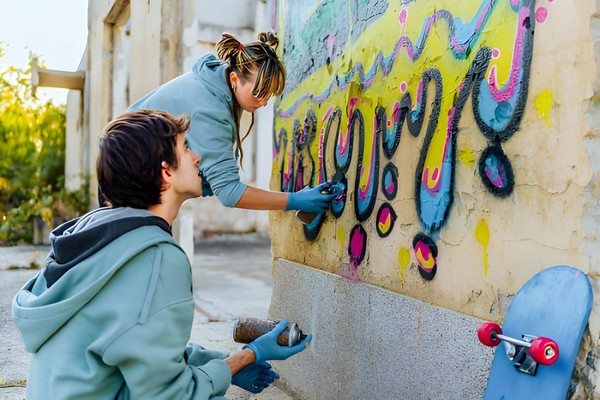
That constant change turns certain locations into outdoor galleries. But unlike museums, nothing stays permanent. The wall evolves again and again.
You might see:
- Bright letter pieces covering large concrete panels
- Cartoon characters mixed with abstract shapes
- Experimental colour patterns spreading across the wall
- New layers slowly covering older artwork
Every visit becomes a new experience.
How Artists Find Legal Painting Spaces
Finding legal graffiti walls is not always obvious, though. Sometimes the city officially announces them. Other times, local communities support certain locations where artists can paint without worrying about penalties.
A few common signs that a wall is considered legal include:
- Property owners or municipalities give permission
- Artists are free to paint without fines
- Older artwork can be replaced by new pieces
- Community art events sometimes take place there
These spaces often become gathering points for creative people. Beginners, experienced painters, photographers, everyone shows up at different times just to see what is happening.
Why These Walls Matter
What I find interesting is how these places connect with workshops and learning moments. People joining graffiti sessions, like those by Graffitifun, often see these walls for the first time there. Instead of painting alone, they step into a creative space, blank walls waiting, spray cans shaking, sketches slowly turning into colour.
 E-Globe Business