
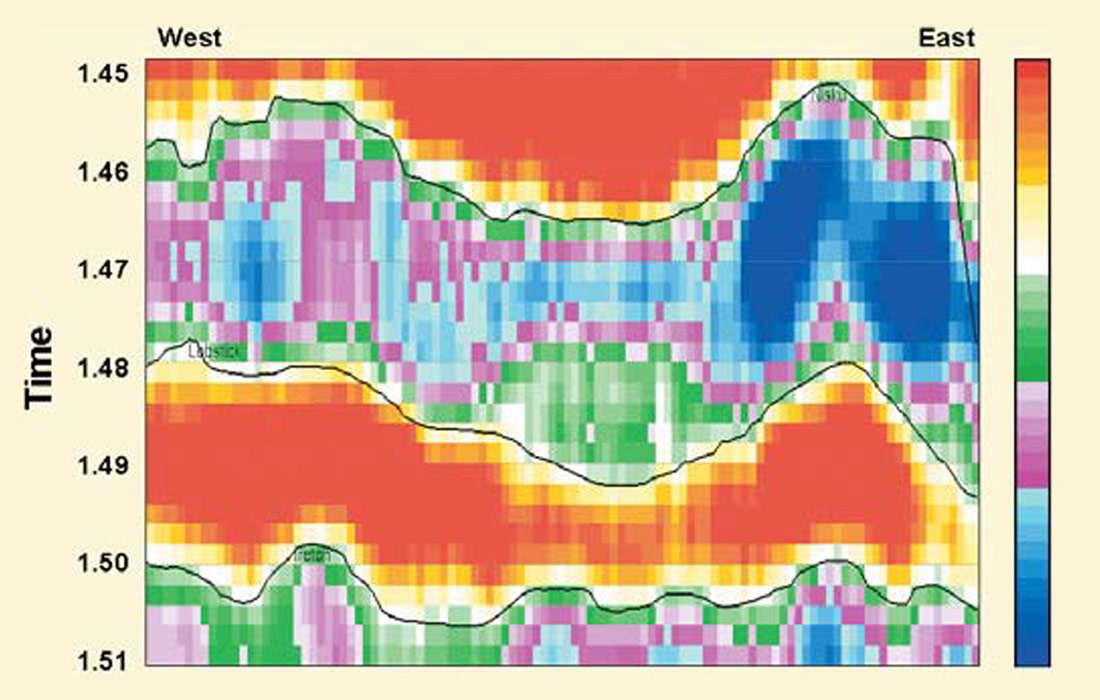
Seismic inversion has revolutionized the way geophysicists and geologists interpret subsurface data, playing a crucial role in the exploration and development of oil and gas resources. Traditionally, seismic data has been used to map underground structures and identify potential reserves, but the advent of seismic inversion technology has provided a much more accurate and detailed picture of what lies beneath the Earth’s surface. In this article, we’ll explore what seismic inversion is, how seismic inversion software works, and the significant impact it has had on the oil and gas industry.
What is Seismic Inversion?
Seismic inversion workflow is the process of converting seismic reflection data into a quantitative model of the subsurface properties of the Earth. In simple terms, it transforms the recorded seismic waves (which travel through rock layers) into a clearer picture of subsurface rock properties such as density, porosity, and fluid content. These properties are essential for assessing the potential of oil and gas reservoirs and making better decisions on where to drill.
Seismic inversion takes the seismic data, which traditionally only provides information about the rock layers’ geometrical properties and translates it into a more detailed and interpretable form. It uses mathematical and computational models to “invert” seismic data, allowing geophysicists to estimate various physical properties of the subsurface, including:
- Impedance: A key property for determining the rock type and fluid content.
- Velocity: Helps to understand the seismic wave travel time through different rock layers.
- Density: Provides insight into the composition and structure of the rock layers.
How Seismic Inversion Software Works
Seismic inversion software typically integrates both seismic data and geological knowledge to generate detailed models of the subsurface. The process involves the following steps:
- Data Input: Seismic inversion starts with raw seismic data, which are collected using seismic surveys. These surveys capture the travel time of seismic waves that reflect off various geological layers beneath the Earth’s surface.
- Pre-processing: The seismic data are often noisy and may require filtering and correction. The software cleans the data to enhance its quality and reliability for inversion.
- Modelling: The software then uses inversion algorithms, such as linear inversion, non-linear inversion, or full waveform inversion, to transform the seismic data into a model of the subsurface. These models incorporate geological constraints and other geological data like well logs.
- Output: The result is a set of images or models that represent the subsurface layers and their properties with high resolution. These models are typically in the form of impedance, velocity, or density maps that offer a much clearer understanding of the reservoir characteristics.
Key Features of Seismic Inversion Software
- High-Resolution Imaging: Seismic inversion software can generate high-resolution models that provide clearer and more accurate representations of subsurface geology. This allows for a better understanding of the stratigraphy and fluid distribution in each area.
- Multi-Domain Analysis: Modern software packages can perform inversion in various domains, including time, depth, and frequency. This flexibility allows geophysicists to choose the most appropriate method for their specific data and objectives.
- Advanced Algorithms: Seismic inversion software leverages advanced algorithms, such as least-squares inversion, constrained inversion, and Bayesian inversion. These algorithms enhance the accuracy of the inversion process and ensure more reliable results.
- Integration with Other Software: Many seismic inversion programs can be integrated with other geological and reservoir simulation software, enabling a more comprehensive analysis of seismic data, well logs, and production data. This integration is vital for making informed decisions in oil and gas exploration.
The Impact of Seismic Inversion Software on the Oil and Gas Industry
Seismic inversion software has had a transformative impact on the oil and gas industry, offering numerous advantages in exploration, drilling, and production. Here are some of the keyways it has made a difference:
1. Enhanced Reservoir Characterization
Before seismic inversion, geophysicists could only rely on seismic reflection data to infer the geometry of subsurface structures. This method provided limited information about the rock properties, making it difficult to accurately determine the presence of hydrocarbons. Seismic inversion has significantly enhanced reservoir characterization by providing detailed models of subsurface properties, such as impedance, velocity, and density. These models offer insights into the fluid content, porosity, and permeability of rock formations, helping companies identify promising drilling locations with greater precision.
2. Improved Exploration Success Rates
In the highly competitive and risky world of oil and gas exploration, accurate data is crucial. Seismic inversion allows geologists and geophysicists to build a more reliable model of subsurface reservoirs, reducing the uncertainty in exploration. By identifying the precise location and quality of hydrocarbon deposits, seismic inversion software has led to more successful exploration ventures, lowering the risk of dry wells and improving overall exploration success rates.
3. Better Well Placement and Drilling Decisions
Once a potential drilling site is identified, seismic inversion software continues to play a key role. The detailed subsurface models it produces help operators make more informed decisions about well placement. By understanding the rock and fluid properties in a specific area, operators can optimize well locations and drilling paths, reducing the number of wells needed to access a reservoir and improving the overall efficiency of the drilling process.
4. Optimized Production and Recovery
In addition to aiding exploration and drilling, seismic inversion also helps with the ongoing management of oil and gas reservoirs. By monitoring how the reservoir behaves over time, companies can adjust their production strategies to maximize recovery. Seismic inversion helps geophysicists track changes in the subsurface, allowing for better modelling of fluid flow and more accurate predictions of how oil and gas will be extracted from the reservoir. This results in improved recovery rates and more efficient resource management.
5. Cost and Time Efficiency
Seismic inversion significantly improves the efficiency of oil and gas exploration and production operations. By providing accurate and detailed subsurface models, companies can make better decisions upfront, reducing the need for expensive trial-and-error drilling. Additionally, the ability to optimize drilling and production strategies helps companies maximize the life of their wells and minimize unnecessary expenses. This cost efficiency is crucial in an industry where margins can be tight, and investment in new exploration projects is a major decision.
6. Support for Carbon Capture and Storage (CCS)
Seismic inversion has also played a role in the emerging field of carbon capture and storage (CCS). By accurately characterizing subsurface rock formations, seismic inversion software aids in identifying suitable sites for the long-term storage of carbon dioxide. This has significant implications for reducing greenhouse gas emissions and helping the oil and gas industry meet sustainability targets.
A Powerful Tool for the Future
Seismic inversion software has revolutionized the way the oil and gas industry approaches exploration, drilling, and production. By providing more accurate and detailed subsurface models, this technology has improved decision-making, reduced costs, and increased the overall success of oil and gas ventures. As the industry continues to face growing demands for efficiency and sustainability, seismic inversion will remain an essential tool for unlocking the potential of subsurface reservoirs, helping companies meet their production goals while minimizing environmental impact.
In the future, as the technology continues to evolve, seismic inversion will likely play an even more pivotal role in optimizing resource extraction, managing reservoirs, and supporting new energy solutions like carbon capture, making it an indispensable tool in the oil and gas industry.
 E-Globe Business