
Introduction
One of the most important things that you ought to know about the solar panel or unit is that, it is one of the most important parts of photovoltaic system. Also, they are made out of a series of photovoltaic cells which is collected in the form of a panel. Besides that, you must have noticed that, it comes in a wide range of rectangular shapes, which are installed in combination to create electricity. Solar units or panels also, sometimes called as photovoltaics gather the energy from the sun and convert it into electricity which is used to power home or businesses. To know more about, adding panels to existing solar system click here. The solar panels are one such which can be used to help a buildings electricity or provide power at distant locations. Besides its use in commercial and residential, there is a huge scale industries or use of solar. Some places you will notice that there is vast solar farm which provides electricity to big urban populations and so on.
Solar Panels and What it is Made of
The pivotal component of any solar panel or unit is the solar cell. The number of solar cells is used to make a big solar panel or unit. And, the cells in the solar unit are a part that converts sunlight into electricity. The solar panels are mostly made of crystalline silicon kind of solar cells. One of the best parts that you will know about the solar cells are that they are made of layered silicon, boron and phosphorous. Although, you will know that, there are distinct kinds of photovoltaic cells. The cells in the solar unit, once made are laid into a grid pattern. And, the quantity of these cells mostly depends on size of the unit being developed as many distinct sizes option are there. After the cells are laid out, the units are sealed to secure the cells within and covered with a non-reflective glass. The glass secures the cells from damage, & is kind of non-reflective as the name suggests, which makes sure that the sunlight can reach the cells.
Working of the Solar Panels/Units
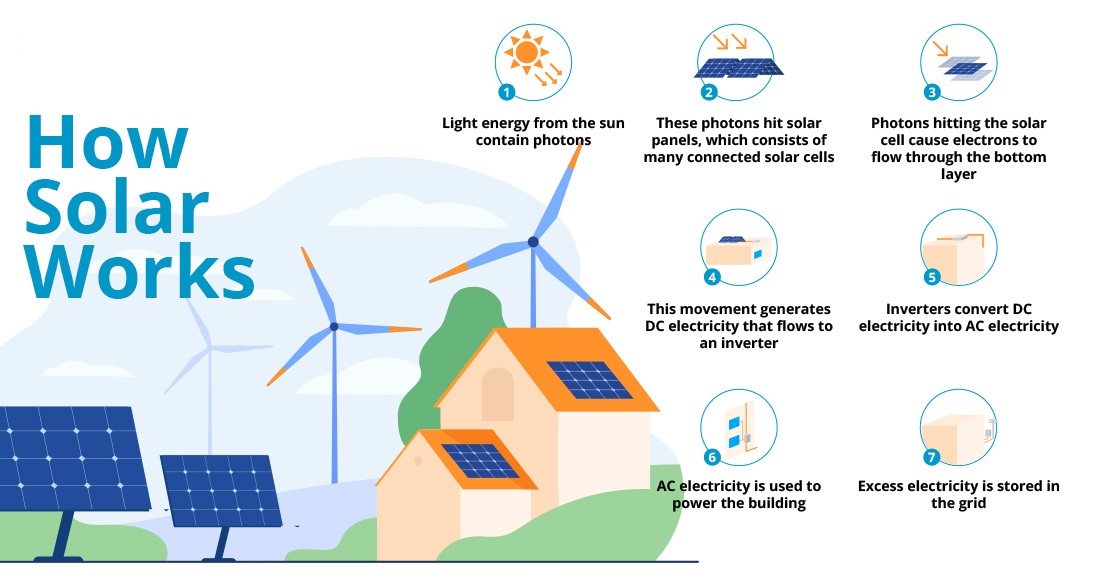
After the cells are sealed, the unit is placed inside a rigid metallic frame. This frame is specifically made to stop the deformation and includes a hole for drainage to prevent water from storing up on the panel as a build-up of or storage of water can lessen the efficaciousness of the panels or units. The back of the panel is also sealed which stops further damage. In a solar unit, individual cells absorb photons from the sun which then produces electric current in cell through a phenomenon called as photovoltaic effect. An inverter is used to change the DC created by the solar unit into an AC i.e. alternating current.
 E-Globe Business