
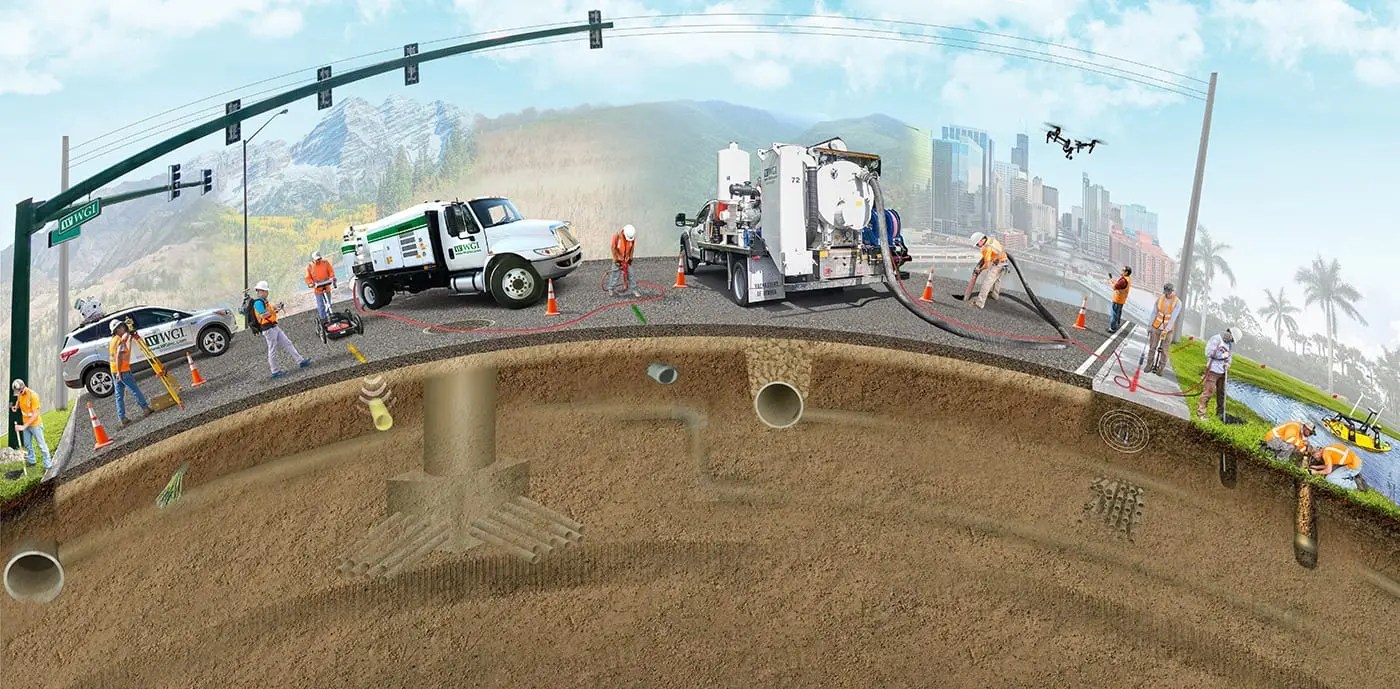
Quality Levels are utilized to communicate the level of confidence and the methods used to determine the position of a utility. Once the QL has been determined, the SUE work has been completed, and a computer-aided design (CAD) file depicting the best-known position of the utilities has been created, a conflict matrix is generated to determine if utility relocation is required for the project’s success. Identifying the hazards, including conflicts, in the matrix prior to the beginning of a project is essential to the planning and design phases. Numerous technologies and approaches are used to collect SUE data in the field. These techniques include vacuum excavation, electromagnetic locating, ground penetrating radar (GPR), and metal detection. This information can be collected using surveying technologies like Global Positioning Systems (GPS), Light Detection and Ranging (LiDAR), and Robotic Total Stations and then incorporated into CAD programs like MicroStation, OpenRoads Designer, AutoCAD, and GIS.Moreover, software development uses the service locator pattern to encapsulate the methods involved in obtaining a service with a strong abstraction layer. Conducting soil testing is also essential to determine the suitability of soil for proposed construction work for the construction of buildings or any structure. The soil responsible for absorbing the stresses imposed by the structure should be rigorously evaluated to ensure optimal performance. If soil is not properly tested, the entire building or structure will be damaged, collapse, or lean. At Durkin, we excel at providing engineering and surveying services to the Australian construction industry.Subsurface Utility Engineering (SUE) is a subdiscipline of civil engineering that investigates buried utilities and identifies the potential design conflicts they may pose to mitigate associated risks. These hazards are identified using utility owner record drawings, geophysical methods to discover a utility’s horizontal position, vacuum excavation to determine the vertical position, and a survey of this data referenced on a topographic map or other types of mapping.
 E-Globe Business