
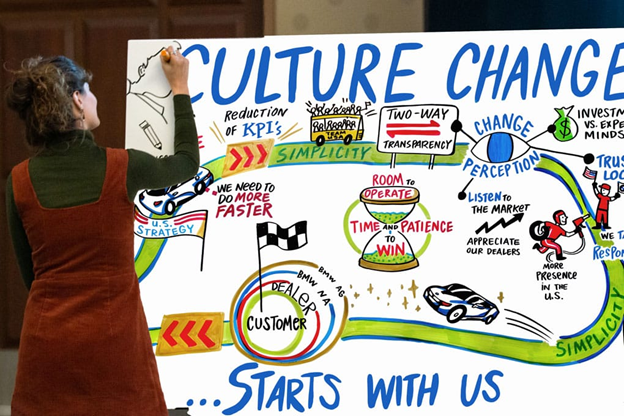
Graphic facilitation is a method used to guide group discussions and teamwork through simple drawings, symbols, charts, and keywords. Many people confuse it with graphic recording. While both use visual notes, there is an important difference. Graphic recording focuses mainly on capturing ideas and turning them into visuals as people talk. Graphic facilitation, on the other hand, does more than record. It helps direct the flow of the conversation, support teamwork, and encourage creative thinking.
A graphic facilitator listens carefully, draws ideas on the spot, guides the discussion when needed, and helps everyone stay focused on the goals. This method makes meetings more lively, helps people understand ideas faster, and makes planning easier for teams.
Why Graphic Facilitation Is Helpful
Meetings can sometimes feel boring, confusing, or unorganized. People talk, but ideas get lost or repeated. Some members may also feel shy or unsure when sharing their thoughts. Graphic facilitation solves these problems by showing ideas visually.
When ideas are drawn, people pay more attention. The group can see connections clearly, remember information better, and feel motivated to participate. It also helps avoid misunderstandings, because everyone sees the same information in real time. In short, graphic facilitation brings clarity, energy, and teamwork into the conversation.
Key Elements of Graphic Facilitation
1. Guiding Discussions in Real Time
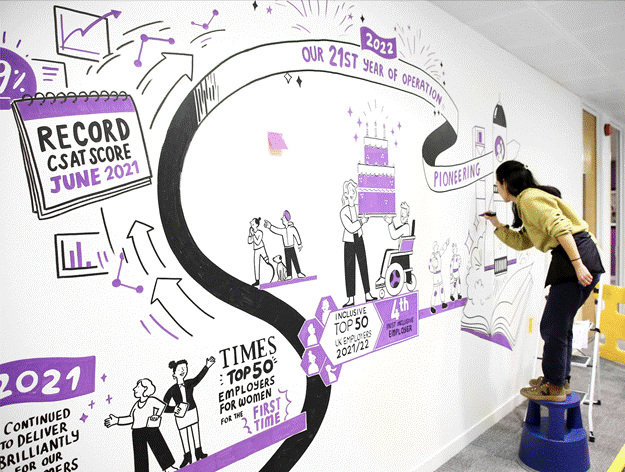
A major skill in graphic facilitation is managing ideas as they come. The facilitator listens, summarizes, and draws key points right away. They also help move the conversation forward by asking helpful questions or pointing out topics that need more attention.
Sometimes, plans change during a discussion. The facilitator is ready to adjust quickly so the group stays focused and productive. This ability to guide the conversation while creating visuals makes the process smoother and more meaningful.
2. Understanding Group Behavior
Every group is different. Some people talk a lot, while others prefer silence. Some topics are exciting, while others can be sensitive or emotional. A good graphic facilitator observes body language, tone of voice, and group mood.
They know how to make everyone feel included and comfortable. If discussions become heated or stressful, the facilitator helps calm the situation and keep communication respectful. This helps create a safe space where everyone can share ideas freely.
3. Planning a Clear and Purposeful Agenda
Graphic facilitation begins before the meeting. A strong agenda helps guide the conversation and prevents wasted time. The facilitator works closely with the organizer to plan topics, set goals, and decide on activities.
Each agenda is designed based on what the group needs. This preparation ensures that discussions flow smoothly and that everyone stays on topic and engaged throughout the meeting.
4. Using Visual Tools and Creative Activities
Graphic facilitators use visual tools that help groups think better. These tools may include:
- Mind maps
- Idea charts
- Priority lists
- Start-Stop-Continue worksheets
- Vision boards
These visuals help people organize their thoughts and see ideas clearly. The facilitator also chooses the right activity for the right moment, making sure it fits the group’s goal and energy.
5. Staying Calm and Flexible
Unexpected things can happen in any meeting. The projector might stop working, a speaker may be absent, or schedules may change. A skilled graphic facilitator stays calm and positive, even when plans shift.
Their flexibility shows the group that challenges can be handled with steady thinking and creativity. This calm presence helps keep the meeting on track and ensures participants stay relaxed and confident.
6. Working as Part of the Meeting Team
Graphic facilitators often work with meeting hosts, speakers, and organizers. They check their role, know when to assist, and stay aware of meeting goals. They are active, alert, and ready to help the team at any point.
This teamwork makes the session run smoothly and shows the group that everyone is working toward the same purpose.
7. Helping the Group Take Action
A meeting is successful when plans turn into action. Graphic facilitators help list clear next steps, assign tasks, and set timeframes. They also provide visual summaries after the meeting so participants remember key ideas.
This reflection time helps the group learn from the session and stay focused on goals even after the meeting ends. It ensures that the ideas discussed become real actions, not forgotten notes.
Final Thoughts
Graphic facilitation turns ideas into clear visuals and helps people communicate better. It makes meetings more active, organized, and creative. With strong listening skills, calm guidance, planning, and visual thinking, graphic facilitators help teams reach shared goals in a more meaningful way.
Whether used in schools, companies, workshops, or community activities, this method builds teamwork, encourages fresh ideas, and supports clear decisions. It brings life to discussions and helps people understand and remember information better.
 E-Globe Business