
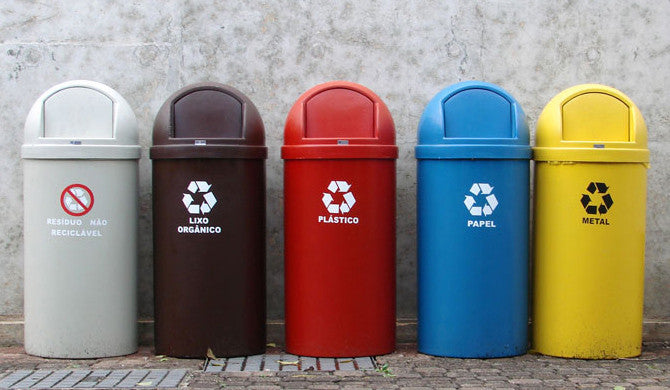
Recyclable materials are plastic, metal, glass, paper, and cardboard. But beware, not everything made from these materials is necessarily recyclable. In addition, objects should always be rinsed and cleaned and contain no food residue: therefore, no pizza boxes full of melted cheese or soiled cans.
Tips and tricks to know to limit the odors of your brown bin:
- Do not place the bin in direct sunlight, but rather in the shade
- Place newspaper in the bottom of your bin
- Wrap meats and table scraps in a paper bag or newspaper
- Try to alternate (wet) kitchen scraps with dry materials (dead leaves, newspaper)
- Mow your lawn a day or two before the collection is done or let it dry before putting it in the bin
- Rinse the bin with mild soap and water or a water and vinegar solution
- There are also odor-destroying vaporizers and other composting materials that you will find
What Cannot Be Thrown In The Trash
Be careful, however: a lot of waste cannot be thrown in a conventional trash can: this is the case of cells, batteries, electronic equipment, and other hazardous waste or containing materials harmful to the environment or health. For some of this waste, there are specific channels. This is particularly the case for:
- cells, batteries, or bulbs which are recycled via special channels (via terminals available in supermarkets in particular)
- the drugs that must be brought back to the pharmacy
- aluminum capsules for coffee can sometimes be brought back to the producer who takes care of them (depending on your supplier).
Waste electrical and electronic equipment (WEEE), for which there are dedicated channels. You can:
- either bring them back to a distributor who must recover your old device in exchange for the purchase of a new one
- either donate it to an association that will take care of a possible re-employment
- either drop it off at a recycling center or particular collection points (check with your municipality or via the eco-systems search engine here).
Edible oils, which can be thrown in your ordinary trash, but it is better, if possible, to drop them off at specialized collection points (check with your municipality). Please do not throw in its pipes: this can clog the pipes and complicate wastewater treatment. Check for catalytic converter processing company
engine oils and other used oil, which must be disposed of at specific collection points, at a garage, or in dedicated collection bins (there are, for example, in port areas)
tires that must be returned to a specialist or distributor
large waste of scrap metal, wood, or materials that must be taken to a recycling center
 E-Globe Business