
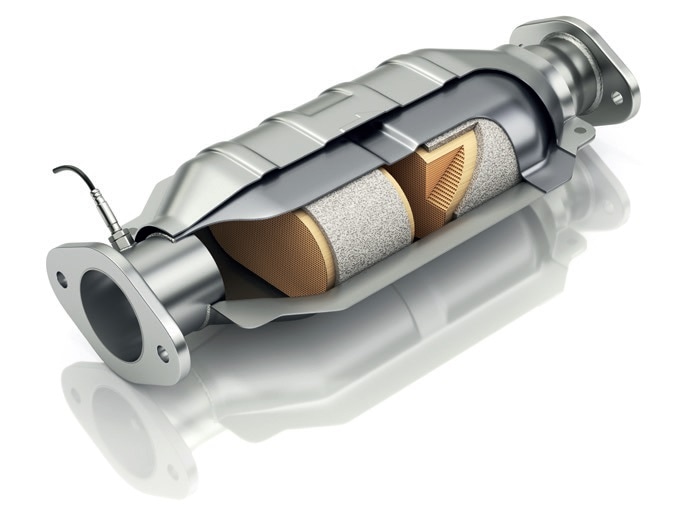
Catalytic converter recycling is big business as well as plays a substantial duty in the initiative to feed the continuous demand for Platinum Group Steels, or PGMs, all of which are in scarce supply. In its early days, this recycling was both logistically, as well as practically complex, and whilst this, to an extent, continues to be the same today, boosted efficiencies and technical innovations have helped the industry burgeon.
To know about catalytic converter refining, please follow the link.
At the top of the food sits the refining operation, the removal of the PGM’s from the driver ceramic and metal substratum. Smelters are the “genuine” refiners, thawing metals to divide the alloy from its contaminations, in order to recoup the real rare-earth elements. The innovation of the recycling procedure is rather complicated and contains several stages. It requires hefty financial investment, and also, thus, has typically been performed by huge companies, that can improve a considerable series of steels.
- DECANNING AS WELL AS MILLING
As soon as accumulated, catalytic converters are de-canned as well as the substratum squashed to a great powder.
- SAMPLING
As soon as refined, the set will be tasted to identify its focus of PGM. Once done, the product will be delivered to a smelter or a refiner.
- PYROMETALLURGICAL SMELTING
The recommended approach for recouping PGM-bearing materials, such as catalytic converters is a pyrometallurgical process, which provides high healing prices. This includes the thermal treatment of mineral as well as metallurgical ores to bring about physical as well as chemical transformations in the materials to allow the healing of the rare-earth elements. The nature of the procedure usually has meant that big quantities of substrates, in excess of 1 load, have been required to compose a “lots.”
- REFINING
After key extraction, the precious metals are divided from base steels by chemical refining techniques consisting of dissolution, solvent extraction, as well as selective precipitation. Additionally, the ceramic substrate of some drivers can be liquified in acid leaving a concentrated residue of rare-earth elements.
 E-Globe Business